

Last updated: February 18, 2026
If you searched “NYS paternity testing laws”, you probably need to know:
(1) when New York Family Court can order DNA testing,
(2) when a judge can deny testing,
(3) what the 95% rule means, and
(4) why New York parentage testing typically requires identity verification + documented chain of custody.
Quick answer: In New York, when paternity is contested, Family Court Act §418 says the court
generally shall order genetic marker / DNA testing—unless the court makes a written finding
that testing is not in the child’s best interests based on res judicata, equitable estoppel,
or the presumption of legitimacy.
If results indicate at least a 95% probability, §418 states the admitted report can create a
rebuttable presumption of paternity (and if unrebutted, can establish paternity and support liability).
Important NY note: NYSDOH parentage/identity testing standards state that paternity testing performed under a New York State permit
must meet court-admissibility standards (including identity verification and documented chain of custody),
regardless of who ordered the test.
Note: This page is general information, not legal advice. If you have an active case, follow your court order
and speak with an attorney or the court.
1) What NYS law covers DNA paternity testing
The primary statute for court-directed genetic testing in contested paternity matters is
Family Court Act §418 (“Genetic marker and DNA tests; admissibility of records or reports of test results; costs of tests”).
It describes when testing is ordered, how reports may be admitted, the 95% presumption, and who pays in court-directed cases.
2) When courts order a DNA test (what the court process looks like)
New York Courts explains that if there’s a disagreement about who the biological father is, the Court may order a DNA test
on the mother, possible father, and child. Depending on the situation, a judge may assign a “lawyer for the child” before testing is ordered,
and the test is scheduled and performed at a laboratory.

Common step-by-step
- A parentage/paternity case is filed or already pending.
- Paternity is contested and the court addresses whether testing should be ordered.
- If ordered, an appointment is scheduled for collection and lab testing.
- Results are reported and the case proceeds (parentage finding, support, etc.).
3) When a judge can deny DNA testing (best interests / equitable estoppel)
A key point in §418 is the explicit exception: no test shall be ordered if the court makes a
written finding that ordering testing is not in the child’s best interests based on
res judicata, equitable estoppel, or the presumption of legitimacy (child born to a married woman).
Plain English: Some cases are not decided by biology alone. If a stable parent-child relationship already exists,
the court may focus on the child’s best interests before ordering DNA testing.
4) How results are treated in court (the 95% presumption)
§418 states that if the admitted DNA report indicates at least a ninety-five percent probability of paternity,
the report can create a rebuttable presumption of paternity. If unrebutted, it can establish paternity and support liability.
5) Who pays for court-ordered testing?
Under §418, the cost is paid in the first instance by the moving party. If the moving party is financially unable to pay,
the court may direct a qualified public health officer to conduct the test (if practicable) or direct payment from local social services funds.
In the final disposition, the court may apportion costs based on ability to pay or assess costs against the party who does not prevail
(subject to inability to pay).
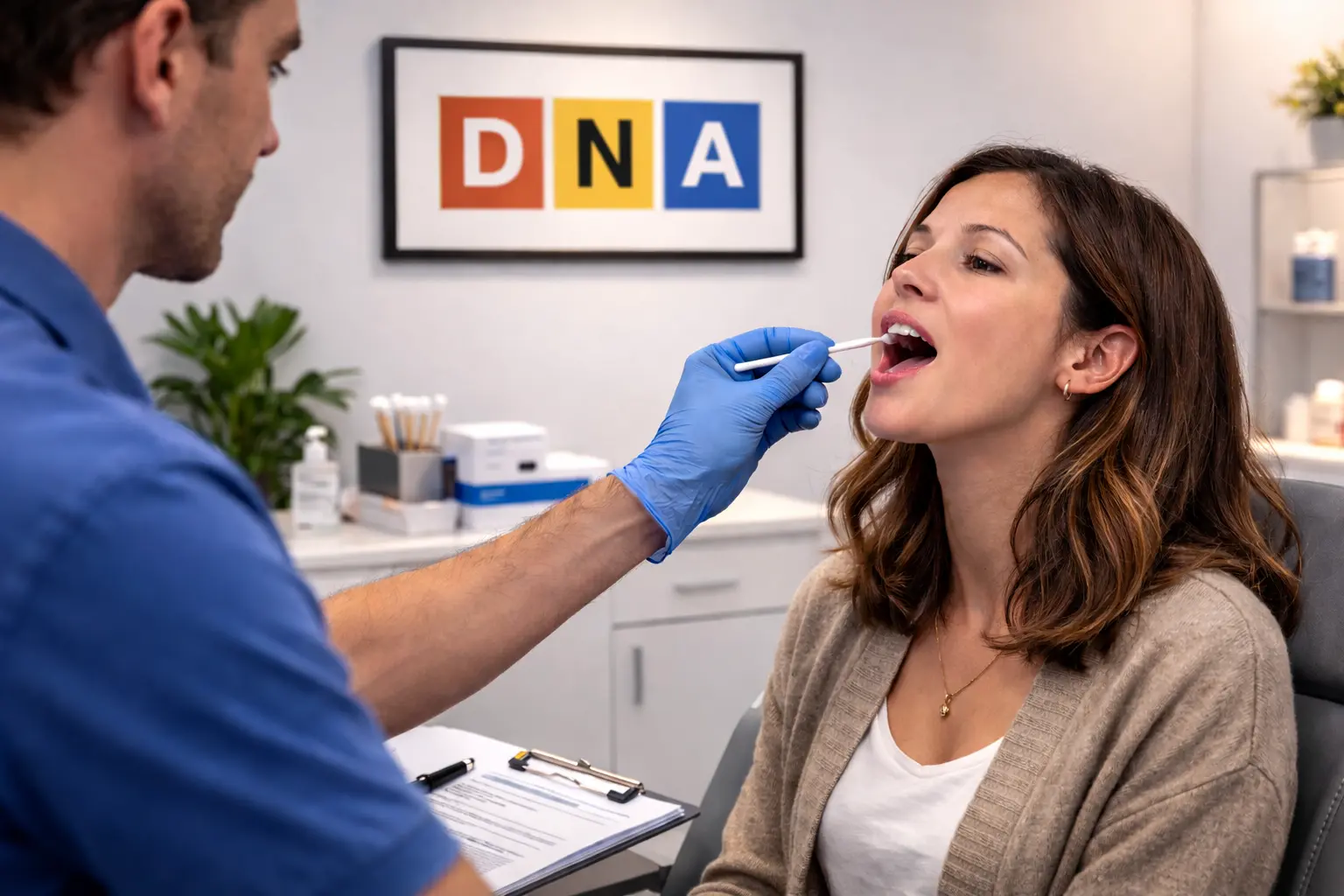
6) Why NY parentage testing requires chain of custody + identity verification
In many states you’ll see a hard split between “legal” and “peace-of-mind” paternity testing. New York is different.
NYSDOH’s Parentage/Identity Testing standards require the laboratory to:
- have procedures to verify identity (and document identity evidence and collection details),
- document chain of custody for each specimen and retain those records, and
- prepare results in a manner intended to ensure acceptance into evidence, stating that paternity testing under a NYS permit must meet court-admissibility standards regardless of order source.
What this means for people searching “peace of mind”
You can seek testing for personal clarity, but if it’s performed under a NYS permit (the compliant pathway),
it still follows court-admissibility protocols (ID verification + documented chain of custody).
The practical difference is usually how you intend to use the results, not whether the collection is documented.
7) AOP (Acknowledgment of Parentage): rules + deadlines
In NYC, an Acknowledgment of Parentage (AOP) form is commonly provided at the hospital when a baby is born.
New York Courts emphasizes it is voluntary and that parents should not sign if they have doubts—parentage can instead be addressed through Family Court.
The AOP can also be signed later through the appropriate process.

Key deadlines (from Family Court Act §516-a)
- If the signatory was 18+ when signing: they may seek to rescind by filing a petition to vacate within the earlier of
60 days of signing or the date of a related administrative/judicial proceeding (as defined by the statute). - After the rescission window, a signatory may challenge by alleging and proving fraud, duress, or material mistake of fact.
Schedule an in-person NYC paternity appointment
Our in-person collections follow identity verification and documented chain-of-custody handling consistent with NY parentage/identity testing standards.
Call to schedule (NYC locations):
Queens 718-585-4844 •
Manhattan 212-235-1857 •
Brooklyn 347-630-8222 •
Bronx 929-242-3717 •
Staten Island 718-841-7200
FAQs
Is there a “peace-of-mind” paternity test in New York that doesn’t require chain of custody?
Under NYSDOH parentage/identity testing standards, paternity testing performed under a New York State permit must meet court-admissibility standards,
and the laboratory must document chain of custody and verify identity—regardless of who ordered the test.
When does Family Court order DNA testing?
When paternity is contested, §418 states the court shall order the mother, child, and alleged father to submit to testing,
unless the court makes a written best-interests finding to deny testing under the statutory exception.
Can a judge deny a DNA test?
Yes. §418 allows denial upon a written finding that testing is not in the child’s best interests based on res judicata, equitable estoppel,
or the presumption of legitimacy.
What does “95% probability” mean?
§418 provides that an admitted report indicating at least a 95% probability can create a rebuttable presumption of paternity.
Who pays for court-ordered testing?
Under §418, the moving party pays first, with provisions for inability to pay and for apportioning costs in the final order.
Official sources
- Family Court Act §418 (NY Senate Open Legislation)
- Family Court Act §516-a (NY Senate Open Legislation)
- NY Courts CourtHelp: DNA Test
- NY Courts CourtHelp: Acknowledgment of Paternity/Parentage
- NYSDOH/Wadsworth: Parentage/Identity Testing Standards (Identity + Chain of Custody + Court Admissibility)
- NYSDOH/Wadsworth CLEP: Clinical laboratory permit requirement